The Line — From Visible Form to the Language of Gesture
The Line as Gesture
(The body behind the line)
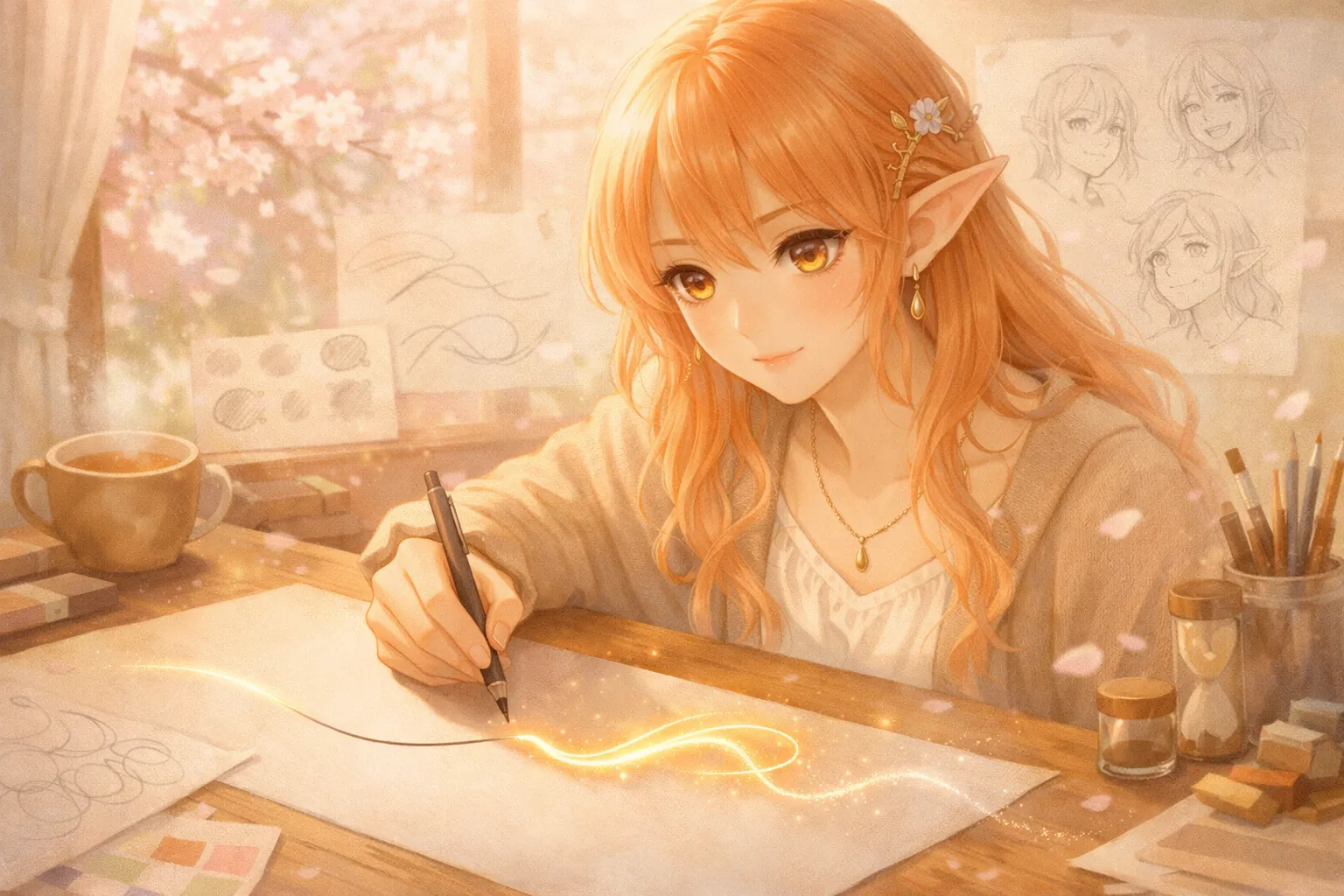
A line is not only a visible shape.
It is the trace of a movement.
Before it becomes an image, it is action.
Before it becomes a surface, it is breath.
Every line retains the memory of the body that drew it.
1. The Engaged Body
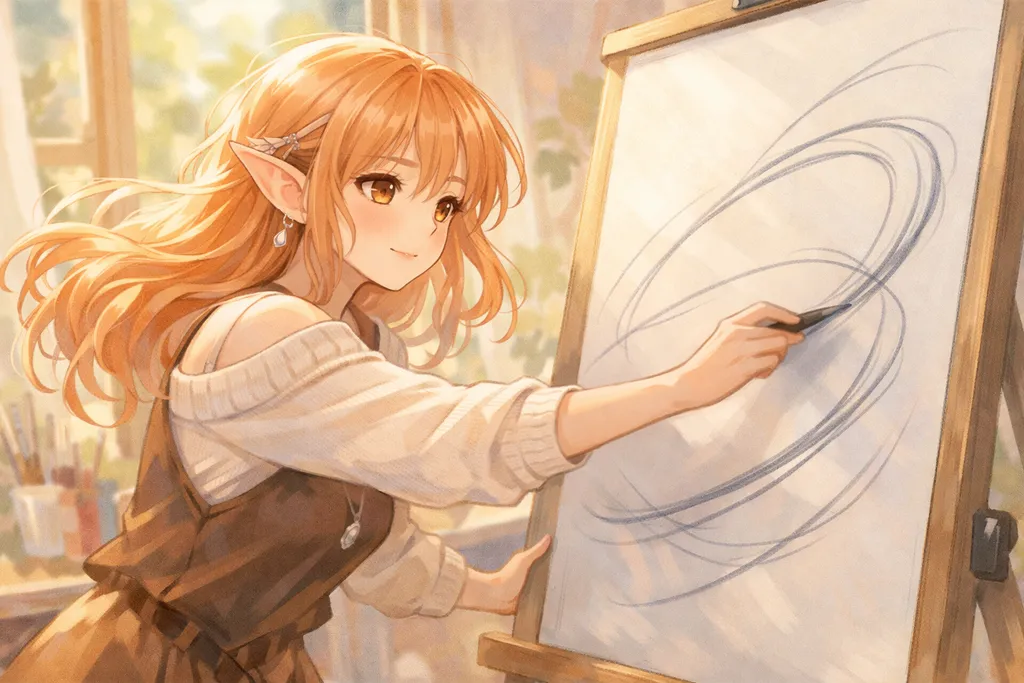
Drawing does not involve only the fingers.
- The fingers handle precision
- The wrist refines direction
- The elbow expands amplitude
- The shoulder provides fluidity
- The whole body supports balance
A living line engages more than the hand.
It involves posture, breathing, and stability.
2. Breath and Rhythm
Breathing directly influences the quality of the line.
Drawing while holding the breath stiffens the stroke.
Drawing while exhaling makes it fluid.
Breath creates natural continuity.
It regulates pressure and speed.
A dynamic drawing has an invisible respiratory rhythm.
3. Energy and the Line of Action
Before details, there is a global energy.
The line of action is the first impulse.
It indicates:
- Direction of movement
- Tension of the body
- Weight and balance
If this line is strong, the drawing stands.
If it is weak, the drawing appears frozen.
Gesture precedes precision.
4. Decision and Confidence
A hesitant line is visible.
Multiplying small corrections creates unintended vibration.
A decisive gesture, even imperfect, appears stronger.
Confidence does not mean rigidity.
It means clear engagement in the movement.
5. Amplitude of the Gesture
Large movements produce more natural lines.
Drawing only with the wrist may make the line tense.
Engaging the shoulder allows fluid and continuous curves.
The broader the gesture,
the more the line breathes.
6. Temporality of the Line
A line contains duration.
One can perceive:
- A fast and spontaneous stroke
- A slow and controlled stroke
- An alternation between acceleration and slowing down
The drawing becomes the capture of a dynamic instant.
7. Presence and Focus
The gesture reveals the inner state.
A distracted mind produces an irregular line.
A focused mind produces a stable line.
The quality of the line depends as much on attention as on technique.
Drawing becomes a grounding practice.
Synthesis
The line as gesture relies on:
- Physical engagement
- Conscious breathing
- Initial line of action
- Affirmed decision
- Amplitude of movement
- Perception of time
- Mental presence
The line is no longer merely visible.
It becomes the trace of a lived moment.
A powerful drawing does not only show a form.
It reveals a movement stopped in time.